Showing posts with label New Cars. Show all posts

Friday, August 13, 2010

Lincoln MKT Concept


The Lincoln MKS is a full-size luxury sedan aimed at bringing new and younger buyers into the Lincoln fold. Not traditional luxury buyers who shop based on name and price tag alone, Lincoln MKS customers are under 50 and value beautiful modern design, more fuel efficiency and good value.

Pricing for Lincoln MKS starts at less than $38,000, a strategic move aimed at attracting new customers to the brand. Many will be first-time luxury buyers, with a significant number expected to migrate from imports. In fact, up to 60 percent of those buying the luxury sedan are expected to be new to Lincoln.

Understated Design: Lincoln MKS debuts new design DNA

The Lincoln MKS is the first vehicle to embrace Lincoln's new design DNA.

"Every element of this luxury sedan reflects the culture of Lincoln - from its well-proportioned athleticism to the design cues we have painstakingly developed, modernizing the best elements over time," says Peter Horbury, executive director of Design for The Americas.

Its most striking exterior design feature is its double-wing grille, which sweeps up into the jewel-like headlamps, wrapping around the front fascia and forming a sharp crease that defines the high beltline. A subtle kick-up over the rear wheel calls back cues found on many classic Lincolns. Strong shoulders, dramatic C-pillars, clean body sides, a tall rear deck and large wheels and tires lend the Lincoln MKS a confident stance.


Modern luxury carries through inside, as well. Space is abundant, with a class-leading interior package. In fact, the MKS has the largest rear cabin in its class in every important dimension, including head, leg and shoulder room. And Lincoln tends to passengers' comfort with standard heated rear seats, an overhead skylight and a sun shade for the backlight.

Its interior is sleek. For instance, the Lincoln MKS's symmetrical instrument panel has fewer break lines than other luxury vehicles. The flow-through center stack is clean and uncluttered, with an information screen integrated at the top. The large center console has a split, two-piece, padded upper section. Each section slides forward individually to form an armrest.

"Luxury buyers still expect rare beauty, but today, they also seek authenticity," Horbury said.

"This is space Lincoln can rightfully reclaim, given the design of our vehicles and the way we've chosen to adorn the MKS with the finest real leathers, rare woods, real aluminum and chrome accents - in a more environmentally responsible way."

For example, the leather used for the seats is perfected with vegetable dyes and a chromium-free tanning process to create the softest leather ever used in a Lincoln.

It is supplied by Bridge of Weir Leather, the same company that provided hides for the Ford Model T and the iconic Continental Mark II, as well as the Concorde, the Queen Elizabeth 2 and the Burj Al Arab, the world's first 7-star hotel.

Ebony wood used for some models is reclaimed from furniture makers and others sources, offering a rare wood with minimal environmental impact. Also offered is Olive Ash, a wood with a distinctive grain pattern created when the roots of two trees grow together.

Smooth Power: Fuel-efficient V-6 today; V-8 power with V-6 efficiency tomorrow

The Lincoln MKS is powered by a Lincoln exclusive new 3.7-liter V-6 engine. The powertrain has been derived from the proven 3.5-liter V-6 found in the Lincoln MKX, which was voted one of Ward's 10-Best Engines for 2007.

Both engines share the same strong, die-cast aluminum block and lightweight four-valve heads for smooth operation at high RPMs. The 3.7-liter's larger cylinders contribute to the increase in horsepower and torque. This engine delivers 270 horsepower and 265 lb.-ft. of torque and is mated to a 6-speed automatic transmission with SelectShift that delivers smoother shifts, better fuel economy, acceleration and the option to manually select gears.

"This engine is tuned to maximize the increased torque to improve performance where it's needed most - standing acceleration and passing," says Michael Celentino, chief engineer.

Less than a year after launch, the Lincoln MKS will be the first vehicle to offer Ford's new gasoline turbo direct injection engine technology.

The premium engine - which offers the power and torque of a V-8 with the fuel efficiency of a V-6 - will make the Lincoln MKS the most powerful and fuel-efficient all-wheel drive luxury sedan in the market.

Lincoln MKS also is available with an all-wheel-drive (AWD) system that provides a confident driving experience in all weather. It uses a sophisticated system of clutches to quickly distribute torque between front and rear wheels - up to 100 percent in either direction - to avoid wheel slip. The AWD system works with the standard Advance Trac® stability control system to provide additional stability, transferring torque from side-to-side.

An all-new independent rear suspension design features vertically mounted shock absorbers mounted at the outboard end of the suspension arms near the wheels, maximizing suspension travel and allowing for more precise suspension tuning.

The MacPherson strut and rear-facing L-shaped lower control arm front suspension also was designed to maximize suspension travel and tuned to work in harmony with the rear suspension. As an added benefit, the new suspension design can accommodate larger, 20-inch wheels and tires without compromising ride comfort.

The Lincoln MKS comes standard with 18-inch bright, machined, cast aluminum painted 10-spoke wheels. Nineteen-inch 10-spoke painted, polished or machined aluminum or a class-exclusive 20-inch, 11-spoke, highly polished, cast aluminum wheel are available options.

Building on a Heritage of Safety Leadership

The Lincoln MKS is equipped with a comprehensive package of the latest in active and passive safety features to provide the highest level of protection for all occupants.

Standard safety features include: dual-stage driver and front passenger air bags, safety belt pretensioners, load-limiting retractors, driver seat positioning sensor, side air bags and Safety Canopy™ side curtain air bags with roll-fold technology and four-wheel ABS brakes.

Additional standard safety features include an anti-theft perimeter alarm, Battery Saver, Belt-Minder®, Child Safety Locks, glow-in-the-dark trunk release, illuminated entry, LATCH (Lower Anchors & Tethers for Children) and a tire pressure monitoring system.

Saturday, August 7, 2010

Kleemann Mercedes-Benz SLK 20K


Kleemann Mercedes-Benz SLK 20K

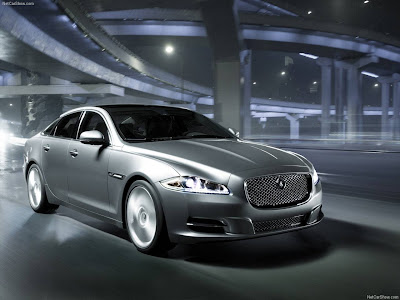
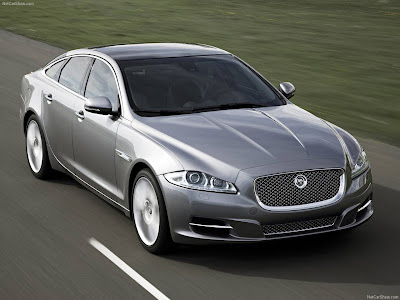
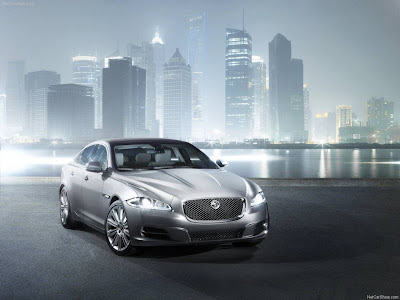
Jaguar XJ


Sleek, sporting and sophisticated, the all-new Jaguar XJ brings a daring new spirit to automotive luxury. It offers a seductive mix of striking design, breathtaking performance and engineering without compromise.

The new Jaguar XJ is the epitome of fluid, contemporary automotive style. The elongated teardrop shape of the side windows establishes the car's silhouette and lies at the heart of its flowing design. And the new Jaguar XJ doesn't just look streamlined: it shares a drag coefficient of 0.29 with the Jaguar XF saloon, making them the most aerodynamic Jaguars ever.

A coupé profile cloaks a cabin that offers comparable levels of space to saloons with a more conventional style. There is generous accommodation for five occupants, while long-wheelbase models provide rear-seat passengers with even greater levels of comfort thanks to an additional 125mm of rear legroom.

The exquisitely designed interior has a strong sporting character throughout. A panoramic glass roof, standard on all models, dramatically enhances the sense of light and space inside the new Jaguar XJ. And in keeping with its status as the ultimate four-door Jaguar, the XJ introduces a new generation of interior technologies, pioneering the use of display and infotainment systems such as the innovative Virtual Instrument dials and optional 1200W Bowers & Wilkins premium surround sound system.


At the heart of the all-new Jaguar XJ's construction is a next-generation application of Jaguar's unique lightweight vehicle architecture. Primarily aluminium, but also using magnesium and composite alloys, this allows Jaguar to produce a significantly lighter and stiffer body - the lightest in its class. The new structure - which retains the same aerospace-based riveting and bonding processes - has been refined using these advanced materials to deliver improved strength, enhanced refinement and superior safety performance.

The new Jaguar XJ offers the choice of four powerful and refined engines, which use the latest powertrain technology to deliver an outstanding combination of performance and class-leading efficiency. The supremely powerful supercharged 510PS 5.0-litre AJ-V8 Gen III will head the line-up, with a 0-60mph time of 4.7 secs (0-100kph in 4.9 secs); 470PS supercharged and 385PS naturally aspirated petrol V8s are also available, dependent on market.

A no-compromise diesel alternative is provided by the formidable 275PS 3.0-litre AJ-V6D Gen III. With twin sequential turbochargers, this is an engine that delivers on every aspect of the Jaguar driving experience, marrying tremendous drive (0-60mph in 6.0 secs, 0-100kph in 6.4 secs) with impressive fuel economy and CO2 emissions (40.1mpg and 184g/km of CO2).

The all-new Jaguar XJ delivers a driving experience that is just as memorable as the car's appearance. Benefitting from technologies pioneered on the exciting new Jaguar XFR and Jaguar XKR models, including continuously variable damping (Adaptive Dynamics), electronically controlled rear differential (Active Differential Control) and a quick ratio power-steering system, the new Jaguar XJ combines responsive, sporting dynamics with the refined, supple ride expected from a luxury Jaguar.

With its unique lightweight aluminium body structure and new, advanced powertrains, the all-new Jaguar XJ already has a head start when it comes to sustainable performance. The aluminium body uses more than 50 percent recycled material, with a plan to increase this to 75 percent. Body panels made from recycled material use only 5 percent of the energy required for new aluminium, equating to a potential saving of three tonnes of CO2 per vehicle.

THE CONCEPT

The all-new Jaguar XJ's distinctive lines mark the next bold evolution of Jaguar's new design language. The striking elongated teardrop shape of the side window graphic establishes the car's streamlined profile, and is balanced by a dramatic lower swage line emanating from the front wheels that reinforces the vehicle's forward stance. The new Jaguar XJ's sleek lines are complemented by a taut waistline, which further accentuates the impression of length and elegance and creates a natural tension as it fades from the front arch into the middle section of the car before reappearing as a strong haunch towards the rear.

Bold, confident face

The face of the XJ is confident, with a wide front track and short overhangs contributing to the finely judged proportions. The nose of the car follows Jaguar's new design language, with a bold and assertive treatment: the powerful mesh grille and slim xenon headlamps creating a strong road presence.

The strong, muscular lower half of the car is contrasted with the slim and graceful quality of the roofline, which takes inspiration from the original 1968 XJ saloon. The wrap-around rear screen reduces the visual weight of the pillars, and gives the impression of an exotic 'floating' roof.

And the new Jaguar XJ doesn't just look sleek and streamlined: it is, alongside the XF, the most aerodynamic Jaguar ever. The car has a drag coefficient (Cd) of 0.29, and, equally importantly, outstanding high-speed stability.

A key factor in achieving this highly efficient aerodynamic performance was the extensive use of Computational Fluid Dynamics (CFD) to refine the shape long before the car ever saw a wind tunnel. Taking the process pioneered on the XF programme to a new level of sophistication, more than 400 detailed CFD studies were performed during the initial design phase.

Every area of the new Jaguar XJ - from the outer skin to the composite undertray to the fine grille meshes of the cooling system - was optimised using this process. Key areas included the profile of the rear decklid, which was engineered to ensure that the airflow was controlled without the need for a spoiler. As well as reduced drag and impressively low wind noise, the overall shape achieves aerodynamic loads that are carefully balanced between front and rear axles to ensure optimum handling balance and high-speed stability.

Dramatic LED lights

The rear end is notable for its pure, sculpted shape, with a conscious absence of unnecessary ornamentation. The sheet metal of the rear panel retains its pure form, with a single leaping Jaguar motif making a strong, confident statement. The LED light clusters wrap stylishly over the rear wings, and feature three dramatic red, vertical strips.

Architectural interior design

The overriding impression from the interior is a sense of personal space, a feeling enhanced by the clean, simple form of the leather-wrapped instrument panel sitting low across the vehicle. At the sides of the cabin, a bold architectural wood veneer sweeps forward from the doors to meet at the front of the car, emphasising the new Jaguar XJ's powerful, dynamic character. This linear, modern use of wood helps to create a truly welcoming environment.

The panoramic glass roof has been from the outset an integral part of the design concept of the all-new Jaguar XJ. It enables a lower, more streamlined roofline, and also dramatically enhances the feeling of light and space within the car. The roof's opening mechanism slides the glass upwards and outwards, so that headroom is never compromised. A dark tint and reflective coating prevent the interior from overheating under strong sunlight, while twin electric blinds provide another level of privacy and sun screening.

Dodge Challenger Mopar


For the first time in its history, Chrysler Group LLC will launch a special-edition Mopar® version of one of its vehicles. The Mopar '10, a 2010 Dodge Challenger Mopar, arrives in Dodge dealerships next month.

"Our 2010 Dodge Challenger Mopar is a collaboration of two iconic brands with tremendous heritage," said Pietro Gorlier, President and CEO of Mopar, Chrysler Group LLC. "Dodge put the heart into this Challenger and Mopar added the soul. The result is a unique, special-edition car that only we can offer."

The U.S. Manufacturer's Suggested Retail Price (MSRP) for Mopar '10 is $38,000 for an automatic transmission and $39,000 for a manual transmission. Both prices include $750 for destination. Customers may pre-order now.

"Mopar '10 has a wicked, sinister appearance that will turn heads." said Ralph Gilles, President and CEO of Dodge, Chrysler Group LLC. "The Mopar brand resonates with hard-core enthusiasts, and this car will too."

Dodge and Mopar collaborated to create Mopar '10, a "Mopar modified" 2010 Dodge Challenger R/T. Under-the-hood features include the legendary 5.7-liter HEMI® V-8 engine, a hood-venting system, a cold-air intake, a front strut-tower brace with shock caps, and a unique engine cover. Under the decklid is a rear strut-tower brace that stiffens the chassis and improves handling characteristics of the car.

Mopar '10 will be available in Brilliant Black with a choice of three accent colors: Mopar Blue, Red or Silver. Accent colors will appear on side stripes as well as in the stitching on the steering wheel and seats. Exterior features include 20-inch forged heritage gloss-black wheels, black-chromed grille surround, and a functional, vented T/A-style hood with vintage hood pins. Mopar logos and graphics are prominent on the front fascia, hood, hood-pin caps, body-side stripes, windows and on the chromed fuel door. A special Mopar '10 car cover also comes with the vehicle.

Interior features include Katzkin leather seating, custom leather-wrapped steering wheel with baseball-style stitching, Mopar shift handles (T-handle for automatics, Pistol Grip for manuals), a serialized dash plaque with Mopar '10 logo and Mopar branding throughout.

Every customer who purchases a Mopar '10 will receive a special owner kit that includes a certificate with the vehicle identification number (VIN), date of build completion, and build number. The kit also includes a limited-edition sketch of the vehicle signed by Chrysler Group design chief Mark Trostle, a book that highlights the special vehicle build, and Mopar '10 merchandise.

Edo Aston Martin DBS


The 12-cylinder Aston Martin DBS flagship already produces 517 horsepower and boasts a top speed of more than 300 km/h (186 mph). Improving on those numbers while underlining the elegance and beautiful design of this British knockout and strengthening its sporting credentials was the goal declared by edo competition.

The power output was tackled first. It was agreed that 517 hp and 570 Nm (420 ft-lb) are not quite enough. The engine control unit was modified via software recalibration. Thanks to a new high performance exhaust system, special catalytic converters and high flow air filters, power output was increased to an impressive 550 hp and 600 Nm (442 ft-lb). This is enough power to accelerate from 0 to 100 km/h (62 mph) in 4.1 seconds and continue on to a top speed of 320 km/h (199 mph). As a matter of principle all modifications performed by edo competition are calibrated and verified on a dynamometer. This way the true power output can be documented.

The high performance exhaust system, which was specially designed for the edo Aston Martin DBS, incorporates butterfly valves allowing it to produce a fantastically rich and sonorous sound. They further help increase the British luxury coupe's power and torque output. The exhaust comes with a programmable control system that monitors backpressure inside the exhaust and opens the 70 mm butterfly valves when a pre-determined level of backpressure is exceeded. The unique advantage of this system is that it provides good torque at low engine speeds without sacrificing top end horsepower. The exhaust system is made from stainless steel and the chromed exhaust tips accentuate the elegant design. The driver can adjust the sound of the edo Aston Martin DBS at any time using a remote control.

The edo competition sports suspension system for the Aston Martin DBS ensures exceptional ride comfort and superior driving dynamics. Thanks to its adjustability in height, compression and rebound damping, the setup can be matched to the customer's driving style. The new suspension provides more cornering grip while improving high speed stability and comfort.

The interior design of the DBS can be spiced up with the available carbon fiber shifter and shifter console, or the customer can opt for a custom interior in any color or material he desires, including handmade leather interiors.

To provide superior levels of grip, edo competition offers exclusive wheel/tire combinations. Featuring a new wheel design, the edo Aston Martin DBS is equipped with a set of 21 in. racing wheels. The three-piece wheels come with stainless steel outer rims and the customer can choose the stock tire dimensions or go with a set of Continental tires in the following dimensions: 255/ 30 ZR 21 (front), 295/ 25 ZR 21 (rear)

Performance and safety are a priority, which is why edo competition has developed a new high performance brake system. Front: 405 mm rotors with 6-piston monoblock calipers and performance brake pads. Rear: 380 mm rotors with 6-piston monoblock calipers and performance brake pads, including braided stainless steel brake lines.

As with all edo competition models, we set no limit to our customers' imaginations. Special interiors or lavish leather upholstery, individual requests are accommodated and executed with quality.

Sunday, August 1, 2010

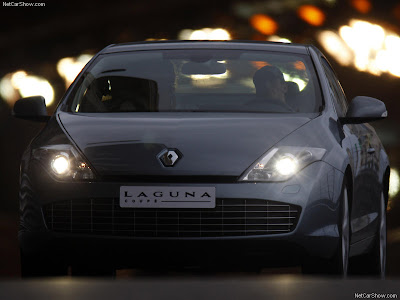
Renault Laguna Coupe


Renault Laguna Coupe


Renault has chosen the glamorous weekend which seen the 2008 Cannes Film Festival coincide with the Monaco Formula 1 Grand Prix to take the wraps off the Renault Laguna Coupe. The flowing lines of the newcomer's elegant, uncluttered design express timeless beauty and the promise of sheer motoring enjoyment. Its performance provides unprecedented pleasure behind the wheel thanks to the combination of its Active Drive chassis equipped with four-wheel steering - which has been acclaimed by the media across Europe on the Renault Laguna GT - and the two new V6 powerplants which have been introduced at the same time as this image-forging vehicle. The brand new V6 dCi, which is poised to become a benchmark in terms of performance and pleasure, delivers 235hp (173kW), while the new 3.5-litre petrolpowered V6 offers 240hp (175kW). Renault Laguna Coupe stands out as an inspiring, fourseater with genuine sensual appeal and a price tag from €31,900 to €47,300.

Saturday May 24, 2008 saw Renault President Carlos Ghosn arrive at the foot of the illustrious steps of the 61st Festival International du Film de Cannes at the wheel of Renault Laguna Coupe. The occasion marked the first public showing of the new model's definitive, distinctive lines and was a fitting way for the carmaker to celebrate the 25th anniversary of its exclusive partnership with the famous film festival. Renault Laguna Coupe also profited from the weekend to make a guest appearance around the track of the 66th Monaco Grand Prix to showcase its sporting credentials. Two Laguna Coupes completed several laps of Monaco's legendary circuit in the hands of ING Renault F1 Team test drivers Lucas di Grassi and Romain Grosjean, providing the many thousands of spectators with a unique and unexpected show.


The car bears a close resemblance to the racy Renault Laguna Coupe Concept revealed at the Frankfurt Motor Show in September 2007, while its elegant styling and proportions boast all the hallmarks associated with truly exceptional coupes. Its distinctive front end suggests the presence under the bonnet of the finest Renault-Nissan Alliance engines which have been designed and developed to ensure supreme driving enjoyment. Indeed, Renault Laguna Coupe is capable of accelerating from standstill to 100kph in less than seven seconds, and this upper-range performance combines with the Active Drive chassis and four-wheel steering to deliver optimum pleasure at the wheel.

Head-turning, racy styling

The flowing lines of Renault Laguna Coupe's elegant, uncluttered design express a blend of timeless beauty and the promise of sheer motoring enjoyment. There is no mistaking the legacy it has inherited from the show car unveiled at the Frankfurt Motor Show in September 2007 and from the Renault Laguna range at the top of which it is destined to preside. With a length of 4.64 metres and a width of 1.83 metres, its proportions are nicely balanced, while the character line which stems from the grille rises forcefully along its flanks, like a wave of air, gracefully underpinning the design of its front wings before extending rearwards to highlight its muscular haunches. The glazed area of its windows is shown off to its best advantage by a pure, flowing arc. Sitting on its 17- or 18-inch aluminium alloy wheels, Renault Laguna Coupe's stance exudes a sense of dynamism and power thanks to a wheelbase dimension of 2.69m and a height of 1.40m. This sensation is echoed by the pronounced crease-lines of its long bonnet and by its new variant headlamps. The rear, meanwhile, features a very short overhang and broad, slim lights which give Renault Laguna Coupe a bright, distinctive lighting signature which suggests refinement and power, especially at night when the indicators form a halo that picks out the contours of the thin red LEDs.

Four-wheel steering for an exceptional ride

Developed jointly by Renault Engineering and specialists from Renault Sport Technologies, Laguna Coupe's technologically-advanced chassis guarantees the ultimate in dynamic performance. Its outstanding agility and stability set new standards when it comes to safety and surefooted handling, while the new car corners with unrivalled directional precision as if it were on rails. Following its introduction on the GT version of Renault Laguna, this chassis has naturally been carried over to Renault Laguna Coupe and is particularly suited to being powered by the new car's V6 engines. At low speeds, the Active Drive chassis and four-wheel steering system enhance manoeuvrability and it takes drivers no time at all to familiarize themselves with their characteristics. In town, as well as on twisty roads, the car is easy to drive and offers outstanding handling precision. It makes choosing the optimal cornering line intuitive and further enhances the pleasure experienced behind Renault Laguna Coupe's wheel, a feeling reinforced by the absence of transient dynamic phenomena through turns and by its directional precision at small low steering wheel angles. On the active safety front, the Active Drive chassis equipped with four-wheel steering excels not only under braking in difficult conditions (asymmetric grip, deployment of ESP), but also when taking avoidance action (the so-called 'elk test'). Meanwhile, the high level of travelling comfort ensures peace of mind for all occupants who can sense the Renault Laguna Coupe unrivalled active safety.

Powertrains with pedigree

Under the bonnet of Renault Laguna Coupe, the brand-new V6 dCi, which is destined to become a benchmark in terms of performance and driving pleasure, develops 235hp (173kW) and peak torque of 450Nm. The same figure for the petrol 3.5 V6 powerplant, which is mated for the first time with the AJ0 automatic six-speed transmission it shares with the diesel engine, is 330Nm, while maximum power is 240hp (175kW). In this configuration, Renault Laguna Coupe can accelerate to 100kph in less than seven seconds. Renault Laguna Coupe also naturally benefits from the best engines available for Laguna, in particular the top performing versions of the range's two-litre petrol and diesel powerplants.

Thursday, July 29, 2010

Mixim Nissan Concept Car

http://www.autofans.us/images/Nissan/Nissan%20Mixim%201.jpg


http://www.autofans.us/images/Nissan/Nissan%20Mixim%203.jpg

http://www.thetorquereport.com/mixim1.jpg

Targeted to younger drivers, the Mixim concept packs all of the goodies most Internet savvy youth may want. Powered by an electric motor/generator situated on each drive axel, the all-wheel-drive compact car sports diamond-shaped styling cues and a centrally- positioned driver's cockpit with two seats sitting on the sides slightly behind the driver. A removable fourth seat can be positioned in the trunk area if required. The instrument panel and steering wheel receive buttons and controls familiar to computer gamers, but on the exterior the most noticeable feature is the scissor doors. Sitting on a 2530mm wheelbase, Mixim is 3700mm long, 1800mm wide and 1400mm high, the Mixim is shorter and lower than Micra, though slightly wider. It weighs just 950kg.