Showing posts with label new Car. Show all posts

Monday, August 9, 2010

Opel Zafira


Opel Zafira


With fresh design accents and three additional engines, the new Opel Zafira will be available at dealerships from February 2008. The Zafira's striking looks communicate dynamics and self-confidence. Its 1.6-liter gasoline and two 1.7-liter CDTI engines embody the current trends: powerful, economical and affordable. This all puts the Opel compact van in an excellent position to continue the success story of the world's first fully versatile seven-seater, which will see its two millionth unit rolling off the assembly line early next year. Following the introduction of the second generation in mid-2005, this Zafira also belongs to the top of its vehicle class with over 450,000 units sold and around ten percent market share in Europe. The new edition of the bestseller makes its world premiere at the Bologna Motor Show (December 7 - 16, 2007).

Alain Visser, Chief Marketing Officer of GM Europe, describes the new Zafira as "the right offer at the right time. We know that customers are very satisfied with its quality, reliability, functionality and versatility. And now we've made the Zafira even sportier and equipped it with more efficient engines. This all keeps the Zafira in benchmark position in the European compact MPV class."

Dynamic V-styling defines face


The new Zafira is characterized by striking front and rear design elements that give the car a sporty note. The confident wide front chrome beam with integrated Opel logo takes the hood tapering and draws it into the two-part radiator grille fins, which are now fully chromed. The distinctive lines around the fog lamp recesses also integrate the bumper into the dynamic V-styling; headlamp housings are also in chrome-look. The Zafira Sport boasts an even more impressive look with its bold, full front lip. The resulting sweep continues from the flared wheelarches, over the side sills to the pronounced rear apron. Other new eye-catching features include two transparent 3-D cells in the red tail lamps. The design enhancement is rounded off by the rear lamps' silver-white strip, which crosses over into the rear chrome beam.

The further refined interior is accentuated by glossy chrome-rings around climate and radio controls as well as new decorative trim on the instrument panel and doors. The Cosmo version features elegant piano lacquer trim on the center console and decorative molding on the steering wheel. The infotainment systems with Navi, CD, DVD and MP3 functions also have stereo connections for external audio equipment, such as an iPod.

The Zafira's "trademark" Flex7 seating system is of course always on board. The unrivalled versatile system ensures fast reconfiguration of the interior without cumbersome removal of the seats.

New engines

The motto for engines is higher economy and power. With a new 1.6-liter gasoline and two 1.7 CDTI common-rail turbo-diesel engines, the range now boasts further highly-efficient propulsion alternatives. In future, Zafira customers can choose from a total of nine different engines. Their output spectrum ranges from the 94 natural gas hp of the especially economical and environmentally-compatible Zafira 1.6 CNG (Compressed Natural Gas) to the 240 turbo hp of the sporty top model Zafira OPC. With these two engines, Opel also enriches the segment with two innovative variants: the natural gas Zafira with only 138 g CO2 paved the way for this alternative form of propulsion, while the OPC version with 240 hp took over the pioneer role for sport vans.

The Zafira model line's favorable operating costs result from a number of factors including low fuel consumption, low maintenance requirements, long service intervals and above all high value retention. This all helped the Opel van to take first place in the "Best Value 2006" awards in specialist magazine "Auto Bild".

The new, weight-optimized 1.6 TWINPORT ECOTEC with seamlessly controllable intake and exhaust camshafts has output of 85 kW/115 hp. The four-cylinder, four-valve unit replaces the 77 kW/105 hp 1.6-liter engine and consumes just 7.0 liters of fuel per 100 km. This reflects a savings of 4.3 percent compared to the predecessor. At the same time, better driving performance can be achieved thanks to the increased power, which is reflected in the 9 km/h higher maximum speed and acceleration of 13.4 seconds from zero to 100 km/h.

The new 1.7 CDTI engines with 81 kW/110 hp and 92 kW/125 hp both come with six-speed manual transmission as standard and feature common-rail injection, four-valve technology with swirl control as well as maintenance-free diesel particulate filter. They replace the 74 kW/100 hp 1.9 CDTI and the manual gearbox version of the 88 kW/120 hp 1.9-liter diesel. With increased torque of 20 and 40 Nm respectively, the 1.7 CDTI units provide noticeably more power while consumption and emissions are reduced. Efficiency is increased by up to 5 percent. Both diesel units require 5.7 liters of fuel per 100 km and emit just 152 g CO2 per km.

Technological excellence

The new edition of the Zafira also offers innovative technological highlights unique in this vehicle class. These include the optional IDSPlus chassis system with electronic CDC (Continuous Damping Control), which provides an exclusive dimension of driving comfort and safety. In this integrated chassis control system, the control units and sensors of ESPPlus, ABS and CDC exchange data constantly, resulting in immediate optimization of chassis fine-tuning. The new edition's further improved trailer stability control is also far from a matter of course when looking at other brands. The sophisticated system monitors the intensity of yawing motions in the car-trailer combination. Such motions are stabilized by control electronics via regulated brake application.

Best-in-class Zafira: Opel introduced the AFL bi-xenon headlamp system (Adaptive Forward Lighting) with dynamic curve light into the compact van segment. The panorama roof system is a true highlight, further enhancing the pleasant, light atmosphere for the passengers. The power-operated shading system protects against strong sunlight when needed. For practical organization in the interior, the roof console running down the length of the ceiling houses five large drop-down storage compartments. These innovative technological features underline the modern overall concept of the flexible compact van.

Sunday, August 1, 2010

Mitsubishi CUV


At the 2010 New York International Auto Show, Mitsubishi Motors expanded the Outlander family lineup with the debut of an all-new crossover utility vehicle (CUV). Designed from the bottom up with a striking design and rigid, lightweight body, the smart-sized crossover combines fuel efficiency with stylish and feature-rich premium performance. Using lightweight, dent-resistant plastic front fender body panels, regenerative braking and enhanced class-leading aerodynamics, engineers have brought estimated highway fuel economy into the 31mpg range. Boosting the new crossover's list of premium features are such standard technologies as Active Stability Control (ASC), Hill Start Assist (HSA), Electric Power Steering (EPS), a comprehensive seven-airbag safety system, and a cutting edge, high-contrast LCD instrument display. Active and stylish buyers will also appreciate the available LED-accented Panoramic Glass Roof, 710W nine-speaker Rockford Fosgate audio system and FUSE Hands-free Link system.

Two trims will be offered in the U.S. market for 2010: the budget-minded ES with a standard 5-speed manual transmission or the premium SE with a standard sportronic 6-speed CVT with magnesium-alloy paddle shifters. Standard for all models is a fuel efficient, 148hp MIVEC-equipped 2.0-liter four-cylinder engine. A CVT transmission is available on ES trim and electronically controlled All-Wheel Control (AWC) is available on SE models.

Mitsubishi CUV


BOLD SIGNATURE DESIGN

One of the core concepts for the new Mitsubishi CUV is a striking new design language known as "compact dynamism", providing a functionally vibrant look that uses proper, flowing aerodynamics to maximize visual impact and fuel efficiency. Featuring Mitsubishi's distinctive front "jet fighter" grille treatment, the clean and refreshing body lines are both emotionally stirring and high grade. By merging the Outlander's driving position and high-impact SUV design with the vigor of a smaller package, designers have created a cutting-edge entry level CUV that fits a broad range of lifestyles.

The new Mitsubishi CUV also features smoothly refined aerodynamics and a class-leading 0.33 coefficient of drag, beating the Mazda CX7 (0.34), Hyundai Tuscon (0.37), and Subaru Forester (0.38). Special steps were taken during the design process, resulting in a wind tunnel tested front face, sloping sides, and gently curving roof. With a lower coefficient of drag, the vehicle's slippery shape is able to cut through air with less effort, increasing both fuel economy and acceleration.

A wide range of eight body colors is available, including new exterior paint options Mercury Gray and Laguna Blue. The ES trim features standard high-rigidity, lightweight 16-in. wheels, available in either steel or aluminum alloy. For those looking for an even sportier look, the SE models include 18-inch alloy wheels and fog lights with chrome bezels. Owners can personalize that exterior with an array of accessories including an optional Exterior Sport Package featuring an alloy fuel door, tailgate spoiler, front skid plate, rear diffuser garnish, and front corner extensions.

Accenting the CUV's exterior treatment and functionality are the addition of LED rear combination taillights on both models and Super wide range High Intensity Discharge (S-HID) headlamps on SE models. With 35% greater light output than standard HID headlamps and a wide coverage beam, S-HID headlamps provide extra visibility and security when driving on dark roads.

SMART-SIZED PACKAGING

In essence the Outlander's "little brother", this entry-level crossover merges the Outlander family's impressive real world capability with a smaller, more maneuverable urban package. Designed to fit with a wide range of active lifestyles, the vehicle features the easy entry, exit, and turning radius of a smaller vehicle yet also the higher sightline and interior volume of a CUV. Seeking to create a dynamic new shape without compromising interior space, designers came up with a spacious five-passenger body that is 14.6-inches shorter than the Outlander. Compared to the Lancer passenger car, the new Mitsubishi CUV features a visual reference point that is almost 5-inches taller.

The entry-level CUV is also more agile and maneuverable than its competitors, featuring an independent suspension design and dynamic shape that leads to easier parking and driving. At just 34.8-ft., its turning circle is smaller than the Ford Escape (36.7-ft.), Nissan Rogue (37.4-ft.), and Honda CR-V (37.8-ft.).

The new crossover's dynamic and compact design is also lightweight at just 3,042-lb. for the ES 5-speed manual transmission model. This reduction in weight was achieved through the use of thinner high-strength steel in the hood, tailgate, and doors, recycled plastic front fenders, and new interior materials. Just a few examples of the design team's attention to detail include changing the handle lock body from zinc to magnesium and using less door trim. Compared to the Hyundai Tucson's 3,179-lb., Nissan Rogue's 3,281-lb. (with roof rails), and Mazda CX7's 3,496-lb., Mitsubishi's new CUV's lower curb weight allows it to deliver better fuel economy and better handling.

SMART PERFORMANCE

All models come standard with a MIVEC-equipped 2.0-liter four-cylinder engine, which produces 148hp at 6,000rpm and 145lb-ft of torque at 4,200rpm. Partial Zero-Emissions Vehicle (PZEV) models produce 143hp at 6,000rpm and 143lb-ft of torque at 4,200rpm. In order to reduce weight, the engine block is cast out of lightweight aluminum and MIVEC variable valve timing technology is used to improve both engine output and efficiency.

Paired with the 2.0-liter engine in ES models is a 5-speed manual transmission or a steering column-mounted paddle shift 6-step Sportronic CVT available. SE trims come standard with the fuel economy-optimized CVT transmission. Mitsubishi engineers have spent countless development hours optimizing the CVT transmission's shift patterns and gear ratios, as well as reducing friction within its hydraulic oil control for greater fuel economy. To enhance the driving experience, magnesium alloy paddle shifters are mounted just behind the steering wheel, allowing the driver to switch between automatic and manual shifting modes without moving their hands. The CVT's manual gear shifting Sport mode can be selected by either pulling the paddle shifter while the lever is in "D" or by selecting Sport mode with the shift lever. After Sport mode is activated, the driver can shift up or down using the paddle shifters. Pulling the right paddle shifter for at least two seconds will deactivate Sport mode.

StudioTorino RKcoupe


StudioTorino RK Coupé

The "RK Coupé" is the natural evolution of the RKSpyder which was presented in summer 2005., It is the perfect blend between German technology and Italian style. It will be limited to 49 vehicles and available also in the US .

The most striking feature of this custom- built car is its subtle and yet massive changes that are equally noticeable and unnoticeable. The design gives the car its well- balanced uniqueness and beauty.

The 440 horse power Coupé blends the balance of a mid engine power plant with chassis stiffness elegant curve lines and the perfect handling to make the "RK Coupé" a truly world class performer.

The RK stands for RUF KOMPRESSOR. The basis of this compressor engine is a centrifugal compressor with a planetary gearbox -a kind of mechanical turbo charger, which is driven mechanically by a Poly-Rip belt. The maximum boost is 0.7 bar. The engine has RUF designed intake manifolds with integrated intercoolers, new injectors, sports catalytic converters and a RUF electronic engine management system. The water-cooled charge cooler has a cooling water circuit with an electric water pump from the water cooler in the front spoiler.

The supercharged 3.8 litre engine of the RUF RK Coupé provides a 440 bhp (324 kW) at 7,000 RPM and 470 Nm torque at 5,500 RPM.

The acceleration from 0 - 100 km/h (0 - 62 mph) of the 3.8 litre RK Coupé with a RUF compressor engine takes only 4.3 sec., from 0 - 200 km/h (0 - 125 mph) only 13.0 sec. The maximum speed is 304 km/h (190 mph).

Lancia Ypsilon Versus


Lancia Ypsilon Versus


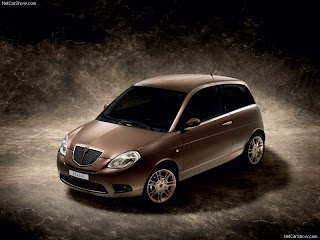
Lancia Ypsilon Versus will be introduced at the 2008 International Paris Motor Show, a Lancia Ypsilon Versus show car produced with the Versace Group brand that will also dress the models on the stand with garments chosen to suit the expressive motifs of the exhibition space. All this confirms the strong bond between Lancia and the world of Fashion. Together with Design and Cinema, Fashion is one of the brand's languages of reference, as is borne out by the choice of Lancia cars as official vehicles for the Milan fashion week.

The Lancia Ypsilon continues to cause a stir, confirming its place as a true icon of Italian design. This time, it is the turn of the Lancia Ypsilon Versus, an original version created as a result of collaboration between Lancia and Versus, a Versace Group brand that has always been a byword for exquisite styling innovation. With its pronounced tendency for a young, dynamic style, Versus reflects the taste of an audience that is very aware of fashion trends and full of vitality. Attention to detail, care over proportions and top-quality workmanship and materials are the strengths of the brand collections. So it seemed quite natural to combine the Versus brand with Lancia Ypsilon, the model directed at the same young and sophisticated audience.

The show car is the forerunner of a special series that will be produced in a limited edition (500 cars) and marketed from March 2009. The car confirms Lancia's interest in the world of fashion. Despite the apparent differences between motoring and fashion, the two worlds actually share important qualities such as talent, creativity and innovation. The winning ingredients of world-renowned Italian style, in other words.

The Lancia Ypsilon Versus show car features certain exterior features of great visual impact. Beginning with the special Bronzino Bronze body colour that bears a screen-printed 'Versus' logo on the roof. The exterior also boasts bronze 16" alloy rims. The original bronze chrome finish is also repeated on the grille, handles, moulding on the doors and rear bumpers and tailgate handle, sporting the Versus logo.

The same strong personality is evident inside, as borne out by special upholstery produced with a band in a cloth that recalls the world of fashion - and a central area in brown leather with a 'Versus' logo heat-printed in relief, just as on the accessories produced by the fashion brand.

The same craftsmanship has been lavished on the pearl-effect leather of the head restraint, adorned with an embossed Versus logo, on the dashboard and on the door panels. Everything has been made even more elegant and exclusive by detailing on the instrument panel, sill plate and gearbox that also have the same bronze chrome finish as the exterior features.

Citroen C4 Coupe


Citroen C4 Coupe


Citroën has made a number of changes to the Citroën C4 to make it even more:
elegant, dynamic and efficient,
economical and low on emissions,
interactive and communicative.

Citroën has made some judicious styling tweaks to strengthen the car's successful design, which has been a hit with the public right from the start. The restyle focused on the front end, emphasising its elegance, strength and energy.

The interior has also been redesigned. Citroën has added new upholstery and a new grain on several trim parts, and incorporated the rev counter in the middle of the dashboard.

Engine-wise, the Citroën C4 is now available with two new petrol engines co-developed with BMW. The VTi 120 and THP 150 units bring even more on-road pleasure and significantly reduce fuel consumption and emissions.

The HDi diesel engine range has been further enhanced, with many powerplants qualifying for the Airdream® eco-signature. The 2-litre HDi diesel engine is the first to comply with the future Euro V standard in this family. Through the use of new technology (such as low-rolling resistance tyres), several versions with the HDi 92 or HDi 110 paired with a manual or EGS6 gearbox can limit their emissions to 120 g/km of CO2.

The new Citroën C4 boasts a richer array of telematics equipment, notably a new-generation navigation system - MyWay - which comes with a Bluetooth® function and can be connected to portable equipment.

The restyled Citroën C4 retains all the features that have made it a trailblazer in the segment on driving pleasure and safety, including Xenon dual function directional headlamps, the lane departure warning system, the fixed-centred controls steering wheel and hill start assist.

The new Citroën C4 had its world premiere at the Moscow International Motor Show on 26 August 2008.

Bentley Arnage Final Series


Bentley Arnage Final Series


Since its debut in 1998 the Bentley Arnage has conveyed an air of sophisticated understatement as the four-door flagship of the Bentley range. Over the last decade the car has undergone a process of constant refinement to its body, design, chassis and powertrain to maintain its class-leading position in the high luxury market.

To celebrate 10 years of the Arnage, 50 years of its mighty V8 engine and 90 years of the marque, Bentley Motors will launch its limited edition model at the 2008 Paris Motor Show.

Called the Bentley Arnage Final Series, the new model features a unique specification, combining the performance of the 500 bhp Bentley Arnage T with the refinement of the Bentley Arnage R and design elements from the Bentley Brooklands coupe, for the ultimate expression of British luxury and effortless power in a four-door saloon - a grand finale, for the grandest of Bentleys.

Hand crafted at Bentley's Crewe facility, the Final Series is an exclusive run of 150 cars, a unique example of the marque's flagship created to bid 'farewell' to the highly successful Arnage line in the most appropriate manner and style. Bentley Chairman and Chief Executive, Dr Franz-Josef Paefgen, explains:


"For 10 years, Arnage has enjoyed extraordinary success at the pinnacle of the luxury saloon market. The Bentley Arnage Final Series is a celebration of the Arnage era as Bentley prepares for the next generation of its flagship model."

A COMMANDING ROAD PRESENCE

For the last ten years the Arnage's combination of muscular lines and understated luxury have endowed it with a commanding road presence synonymous with all Bentley Grand Tourers, subtly conveying the car's formidable performance potential. This powerful exterior profile is underpinned by a torsionally stiff bodyshell (with an astonishing 6,500 spot welds) that helps to deliver outstanding ride and refinement.

Based on the sporting Arnage T, the Final Series offers a range of discreet exterior cues that further enhance its powerful stance. Key ingredients of the distinctive appearance include a dark-tinted Bentley matrix radiator grille with Flying 'B' mascot and dark-tinted lower grille. The iconic Flying 'B', which can retract neatly into the grille surround, was originally designed by motoring artist F. Gordon Crosby and was first used on the 1930 Bentley 8-Litre.

The Bentley Arnage Final Series is further distinguished by exterior design features first seen on the exclusive Bentley Brooklands coupe, comprising 20-inch five-spoke, two-piece alloy wheels and 'Le Mans' lower front wing air vents.

Additional unique features include body-coloured front and rear lamp bezels, 'jewel' fuel filler cap (made from billet aluminium) together with 'Final Series' wing badges and polished stainless steel treadplates to the front doors.

EXQUISITE CRAFTSMANSHIP

The Bentley Arnage Final Series will have a very special appeal to Bentley customers, as Peter Guest, Head of Department, Body & Trim, explains:

"Thanks to its hand-built exclusivity and superb quality, Arnage has become a world-wide benchmark for automotive craftsmanship. The Bentley Arnage Final Series epitomises the truly bespoke feel we aspire to and are determined to maintain."

Inside, the Bentley Arnage Final Series is everything you would expect of a bespoke Bentley, offering the highest levels of hand-craftsmanship to a small, but discerning audience. The interior offers a remarkably spacious, luxury cabin to provide the ultimate in first-class travel for four adults.

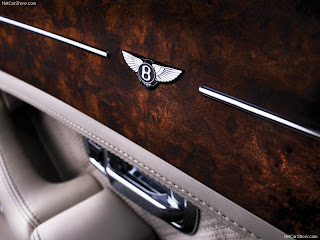
Many of the most desirable Mulliner options are included in Bentley Arnage Final Series as standard, most notably the hand-made waistrails with inset chrome strip with recessed Bentley badges, the new rear cocktail cabinet and document storage trimmed in hide, plus the beautifully designed picnic tables available in a choice of three premium unbleached wood veneers - all prime examples of Crewe craftsmanship.

Bentley is the only automobile manufacturer in the world to offer as standard a cabin trimmed entirely with leather hides - including the headlining. The hand-crafted steering wheel requires up to 16 hours of double-stitching.

A set of mirror-matched veneers for each car takes 13 days to craft, while 17 hides and almost 400 separate pieces of leather are used for the upholstery, trim and headlining. Bentley Arnage Final Series spans the many eras between traditional coachbuilding skills and 21st century high-performance automotive engineering.

As in every Bentley, peerless craftsmanship and bespoke finishing are to the fore. Every item of trim, be it veneer, hide or chromed bezel, uses authentic materials. Built by hand, the creation of each Arnage takes a minimum of six weeks and owners can take full advantage of Mulliner, Bentley's specialist commissioning department, as Trevor Gay, Personal Commissioning Manager, Mulliner elaborates:

"Up to 80 percent of Arnage customers specify Mulliner features. Mulliner is completely dedicated to fully understanding their requirements and to delivering a bespoke experience and a uniquely high level of personal service."

Bentley Arnage Final Series is available in the full Bentley range of 42 exterior colours, 25 interior hides, and three veneers, plus the comprehensive line-up of Mulliner options and its bespoke colour-matching service that enable Bentley owners to create a uniquely personal car.

To help customers finalise the specification of their Bentley Arnage Final Series, the Bentley design team recommends six classic colour and trim combinations - Titan Grey (with Anthracite interior), Royal Ebony (with Beluga), Windsor Blue (with Windsor Blue), Meteor (with Imperial Blue), Burnt Oak (with Burnt Oak) and Black Velvet (with Burgundy).

NEW FEATURE ENHANCEMENTS

Bentley Arnage Final Series buyers will also benefit from a range of standard and optional feature enhancements. Standard enhancements include:
New audio head unit - with larger display screen and an SD (secure digital) memory card slot instead of the single CD slot.
New rear cup holders - displaying Bentley craftsmanship, these removable cup holders attach to the front edge of the rear centre armrest, or can be stored inside the armrest.
New hide covered boot rail - features coordinated leather trim and a chrome strip along the top edge.
New optional enhancements available at extra cost:
iPod Interface - links to the Infotainment system and enables customers to play their favourite music through the car's audio system. Supplied with connectors for iPod, USB, Mini USB and a 3.5mm AUX jack. Includes a 12 volt power outlet for charging purposes.
Rear remote control - enables the rear seat passengers to control the infotainment system. When not in use it can be stored in a dedicated pouch inside the rear centre armrest.
Naim for Bentley world class audio system - delivers the world's best in-car sound stage. Created in partnership with Bentley by Naim Audio, a UK-based high end hi-fi manufacturer, this system features 10 speakers, a dual channel sub-woofer and a 1100 Watt amplifier - the world's most powerful production unit fitted in a car. Bentley is also the first car manufacturer to use a next-generation Digital Signal Processor (DSP) in its audio system which features eight individual modes to reproduce true emotions and a 'live' concert-like experience.

Toyota Auris HSD


Exclusively designed for the European market, the Toyota Auris HSD (Hybrid Synergy Drive) introduces full hybrid technology to a core model at the heart of Toyota's model line-up. It marks the first step in the deployment of HSD technology across the company's entire European model range by the early 2020s.

Built in Britain at Toyota Motor Manufacturing UK's Burnaston factory, it targets an important shift in customer perceptions of full hybrid drive technology.

The prospect of Britain - and Europe's - first home-manufactured full hybrid model was welcomed by the UK Government. Business Minister Ian Lucas said: "I'm delighted that Toyota has chosen its UK plants to produce the first European Toyota hybrid car and I look forward to seeing it when I'm in Geneva for the Motor Show. Toyota's commitment to reduce CO2 emissions gives fresh impetus to our vision for the UK to lead in the design, manufacture and use of low carbon cars."

Going beyond the benefits of exceptional fuel efficiency and low CO2 emissions that are inherent in Hybrid Synergy Drive, the new Toyota Auris HSD will deliver everyday usability, driving comfort and remarkable quietness for a smooth and sophisticated driving experience that is unlike anything else in the C-segment.

Toyota Auris HSD will be available in two levels: 89g/km and 92g/km, both offer the lowest CO2 emissions and strongest fuel economy in their class. HSD will thus play a significant role in further reducing Toyota's European whole-fleet average CO2 emissions. These have already fallen by 14g/km between 2008 and 2009 to 132g/km, thanks to the introduction of Toyota Optimal Drive technology.

Toyota Auris HSD


Exterior design

Toyota Auris HSD adopts the new exterior styling introduced across the Auris 2010 model range, including a completely redesigned front-end. It also displays a number of model-specific features which help improve the car's aerodynamic efficiency and reference the presence of Toyota's Hybrid Synergy Drive powertrain.

The opening in the upper front grille has been optimised to promote a smooth flow of air over the upper half of the body, and the lower grille has been made larger to reduce airflow resistance and improve engine cooling efficiency.

With a revised foglamp configuration, the flat, vertical surface of the corners of the front bumper corrects the airflow as it passes over the front wheels, helping minimise turbulence in the wheelarches.

Further improvement in aerodynamic efficiency is achieved by a ride height reduced by 5mm; purpose-designed alloy wheels with integrated aerodynamic caps; low rolling resistance tyres; and a large, roof-mounted rear spoiler. Working together to smooth and control the flow of air over the car, these HSD-specific design modifications reduce the coefficient of drag from Cd0.290 to 0.283, contributing to reductions in fuel consumption and CO2 emissions.

Interior design

The interior features a number of modifications, including a revised instrument binnacle in which the tachometer has been replaced by an Eco Drive Assist Monitor. The centre-dial information panel includes additional HSD-specific information such as Energy Flow and Eco Drive Result monitors.

A hybrid blue smart start button has been added to the side of the instrument cluster and the centre console incorporates switches for the Parking Control and EV, ECO and Power drive modes, and a shift-by-wire gear lever.

The illumination is changed to display greenish-white numbers on a hybrid blue background on the meter panel, audio and heating controls, and the Smart Start, Drive Mode and Parking Control switches.

A choice of upholsteries specific to the model will also be available: a blue-flecked fabric or Alcantara panels with leather surrounds.

Hybrid Synergy Drive

Toyota Auris HSD is a full hybrid capable of operating in petrol and electric modes alone, or a combination of both. Its Hybrid Synergy Drive system delivers the energy-saving qualities of a series hybrid, combined with the performance benefits of a parallel hybrid.

The technology delivers impressive, seamless acceleration and remarkably quiet running, with class-leading fuel consumption and CO2 emissions from 74.3mpg and 89g/km.

Toyota's latest generation Hybrid Synergy Driver uses a 1.8-litre VVT-i petrol engine, a powerful electro motor, generator, high performance battery and a power control unit. A power split device with a planetary gear system combines and reallocated power from the engine, electric motor and generator according to the car's operational requirements.

The key to the successful installation of the system in Toyota Auris's front-engine platform is the fact the electric motor, generator and power split device are housed in a single transmission casing that is the size of a conventional gearbox. The seamless E-CVT electric continuously variable transmission is controlled by shift-by-wire technology via an electric shift lever.

The lightweight and compact four-cylinder, 1,798cc Atkinson Cycle VVT-i engine develops 97bhp at 5,200rpm and 142Nm of torque at 4,000rpm. The high performance permanent magnet synchronous 60kW electric motor generates a maximum 207Nm between zero and 13,000rpm.

Powered by the hybrid battery, the electric motor works in tandem with the petrol engine to boost acceleration in normal driving. When the car is operating in EV (electric vehicle) mode, it alone powers the driven wheels.

During deceleration and under braking, the electric motor acts as a high-output generator to effect regenerative braking, recovering kinetic energy that would normally be wasted as heat for storage as electrical energy in the battery.

In combination, the petrol engine and electric motor generated a maximum system power output of 134bhp, giving performance to match a conventional 2.0-litre petrol or diesel hatchback. Conversely, Toyota Auris HSD lower CO2 emissions and significantly lower NOx emissions than diesel-powered cars of comparable performance.

Furthermore, when operating in its switchable EV mode, it cuts CO2 and NOx emissions to zero, driving for up to 1.3 miles (2km) at speeds up to 31mph (50kph), depending on the level of battery charge and driving conditions.

Toyota Auris HSD eco driving experience

Toyota Auris HSD has four driving modes, including three that can be selected "on-demand" by the driver to maximise the HSD powertrain's capabilities and provide comprehensive eco driving support for those who want to adopt a more environmentally efficient style of driving.

EV mode allows for ultra-quiet running on electric motor power lone, giving zero fuel consumption and emissions. ECO mode maximises efficiency and fuel economy, and Power mode boosts system performance. In addition, an Eco Drive Monitor helps driver's maximise the HSD system's efficiency.

The driver can monitor the flow of energy around the HSD system in each mode, via the multi-information display in the instrument panel, which helps promote an easy, fuel-efficient driving technique. There is also a clear and simple power consumption gauge that shows how much power is being used or generated at any given time.

Taking advantage of the inherent quietness of Hybrid Synergy Drive, Toyota has paid special attention to NVH reduction measures to create a calm and quiet cabin environment at all speeds. Road and engine noise have been rigorously suppressed with extensive use of sound-proofing materials. Full-thickness glazing and a multi-layer acoustic windscreen further reduce noise for quieter performance at cruising speeds.